





Taste and price per kilo both matter when you choose a coffee supplier. But neither tells you what each drink costs you, or what your customers will ask about the coffee.
An oat latte in a 16oz cup carries 83p of milk, so the coffee is about a third of its ingredient cost.
This guide gives you the full cup cost recipe, then what to check in a supplier.
Milk drinks carry your menu
Flat whites and lattes are most of your queue, so your house blend's taste in milk is the first thing to judge.
It also means your margin lives in two ingredients, not one. So when you compare quotes, price the milk beside the coffee in each of your bestsellers.

The café cup cost recipe
Here's what a flat white or latte costs you, by cup size and milk. Both drinks are a double shot topped with steamed milk, so they share a recipe at each size.
On the high street, the flat white is often an 8oz drink and the latte a 12oz one.
The coffee.
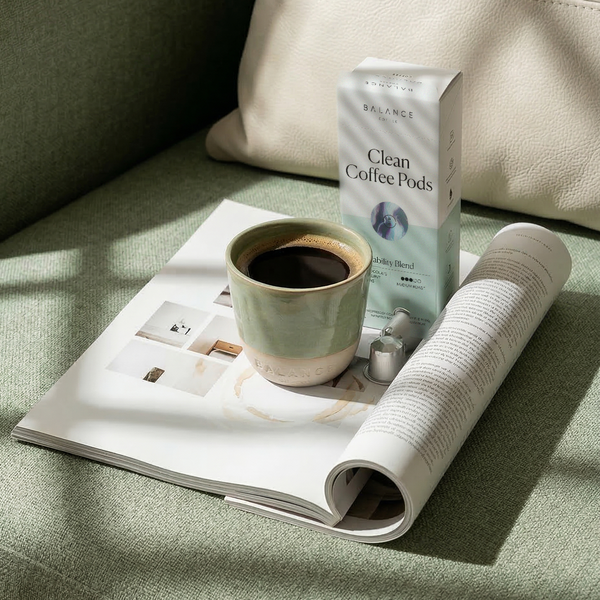
One 15g double shot of Stability Blend, our bestseller.
It costs 42p on a standard trade account (30% off retail) and 33p on our top tier (45% off).
The milk. We've assumed about 180ml in an 8oz cup, 280ml in a 12oz and 380ml in a 16oz, allowing for the shot, the foam and a splash left in the jug. Swap in your own pours.
At the UK foodservice prices we checked online in November 2026, whole milk costs about £1.15 a litre, a barista oat drink £2.18 and a barista almond drink £2.59.
| Cup | Milk | Milk cost | Coffee | Total cost | Coffee's share |
|---|---|---|---|---|---|
| 8oz | Whole | 21p | 33p-42p | 54p-63p | 61%-67% |
| 8oz | Oat | 39p | 33p-42p | 72p-81p | 46%-52% |
| 8oz | Almond | 47p | 33p-42p | 80p-89p | 41%-47% |
| 12oz | Whole | 32p | 33p-42p | 65p-74p | 51%-57% |
| 12oz | Oat | 61p | 33p-42p | 94p-£1.03 | 35%-41% |
| 12oz | Almond | 73p | 33p-42p | £1.06-£1.15 | 31%-37% |
| 16oz | Whole | 44p | 33p-42p | 77p-86p | 43%-49% |
| 16oz | Oat | 83p | 33p-42p | £1.16-£1.25 | 28%-34% |
| 16oz | Almond | 98p | 33p-42p | £1.31-£1.40 | 25%-30% |
The lower figure in each range is our top trade tier, the higher one our standard rate. Costs cover coffee and milk only, before cups, lids, staff and rent.
What you keep from each drink
Now set your own sell prices against those costs. In speciality cafés, a milk coffee sells for £3.50 to £5.50. That's the typical range our founder, James Bellis, has seen in 15+ years in the trade. It isn't a survey. The table below takes a low and a high price for each cup size, with no plant milk surcharge. It assumes you're VAT-registered, so it takes the 20% VAT out first (your price divided by 1.2). That 20% goes to HMRC.
| Cup | Your price, low to high | Price ex VAT | Ingredients as % of price ex VAT | Left after ingredients |
|---|---|---|---|---|
| 8oz, whole | £3.50-£4.30 | £2.92-£3.58 | 15%-22% | £2.29-£3.04 |
| 8oz, oat | £3.50-£4.30 | £2.92-£3.58 | 20%-28% | £2.11-£2.86 |
| 12oz, whole | £3.90-£4.90 | £3.25-£4.08 | 16%-23% | £2.51-£3.43 |
| 12oz, oat | £3.90-£4.90 | £3.25-£4.08 | 23%-32% | £2.22-£3.14 |
| 16oz, whole | £4.30-£5.50 | £3.58-£4.58 | 17%-24% | £2.72-£3.81 |
| 16oz, almond | £4.30-£5.50 | £3.58-£4.58 | 29%-39% | £2.18-£3.27 |
You keep the least when you charge the low price and pay our standard trade price. You keep the most when you charge the high price on our top trade tier. The prices are examples, so swap in your own menu. To work out your own, divide your price by 1.2. Then take away your ingredient cost per cup from the first table.
How to run the recipe on your own menu
Weigh one shot on your grinder, and measure the milk your team pours for each size. Then work through three steps:
- Coffee cost per drink: price per kg divided by 1,000, times the grams in the shot.
- Milk cost per drink: price per litre divided by 1,000, times the millilitres in the cup.
- Margin: your price divided by 1.2, less steps 1 and 2.
Two things usually fall out. A plant milk surcharge often does more for your margin than haggling over the bean price. And moving to a speciality coffee adds pence per cup, not pounds, because a shot uses only 15g of coffee.

What to look for in a café coffee supplier
A blend that works in milk. Most of your drinks will be milky, so taste the espresso with whole milk and oat before you choose.
Stability Blend has notes of milk chocolate, hazelnut and fig, and works in espresso and milk drinks alike. Level Up Blend is made for milky drinks, if you want a bar where lattes lead.
The right format for your kit. An espresso machine with its own grinder takes whole beans. A filter brewer or batch brewer takes ground coffee. Every Balance blend comes as whole bean, ground for filter or ground for espresso, at the same price per kg.
A decaf worth ordering. An afternoon queue brings people who want a coffee without the caffeine. Halcyon Decaf has notes of milk chocolate, caramel and almond, and it's decaffeinated with a natural sugarcane method.
Proof of what's in the bag. Your customers care what's in their cup, and some will ask about your coffee.
UK law caps the main mould toxin in roasted coffee, yet nobody has to test for it before the coffee is sold.
So every month, an independent lab in the TÜV SÜD group tests a sample from across our range for mould toxins, heavy metals and 600+ pesticides, and no Balance lab test has ever failed.
That means our coffee is toxin-free, and you can share the lab report with your customers. Every Balance coffee is also 100% Arabica. Robusta has 83% more caffeine than Arabica, so an all-Arabica cup gives your regulars a calm energy boost with no jitters or crashes.
Ordering that fits a small team. Look for no minimum order, clear delivery costs and payment terms once you're set up.
Ordering coffee beans for your café
We have no minimum order, so you can buy a single bag to try a blend on your bar. UK delivery is £9.99 on orders under 30kg, and free on orders of 30kg or more. Allow 5 working days from order to delivery.
Your first order is paid at checkout. From your second order, you can pay on 30-day terms. Approved accounts also get our digital wholesale pack, with a double-sided table card ready to print.
To size your order, count the coffees you sell on a normal day and multiply by 15g.
A café selling 120 milk drinks a day uses 1.8kg of coffee a day, or 12.6kg over a seven-day week.
Start a little above that, then order to your real sales after the first month.

What other venues say
Cafés, studios and members clubs already serve Balance, from KARVE Club in London to Long Lane in West Sussex. As KARVE Club's founder Yulia puts it: "We chose Balance for their science backed healthy coffee."
Your next step
Run the margin recipe on your own menu, then taste the coffee in milk. Browse our coffee beans for cafés, whole or ground, and see why venues choose Balance as their wholesale coffee supplier in the UK.
When you're ready, see how we work as a coffee supplier for coffee shops and apply for your trade account in a few minutes.

James Bellis
Founder, Balance Coffee
James has worked at the heart of speciality coffee for over 15 years, from the machines behind the bar to the beans in the cup. He started Balance Coffee and writes these guides to help venues earn more from every drink.